Published on July 13th, 2026
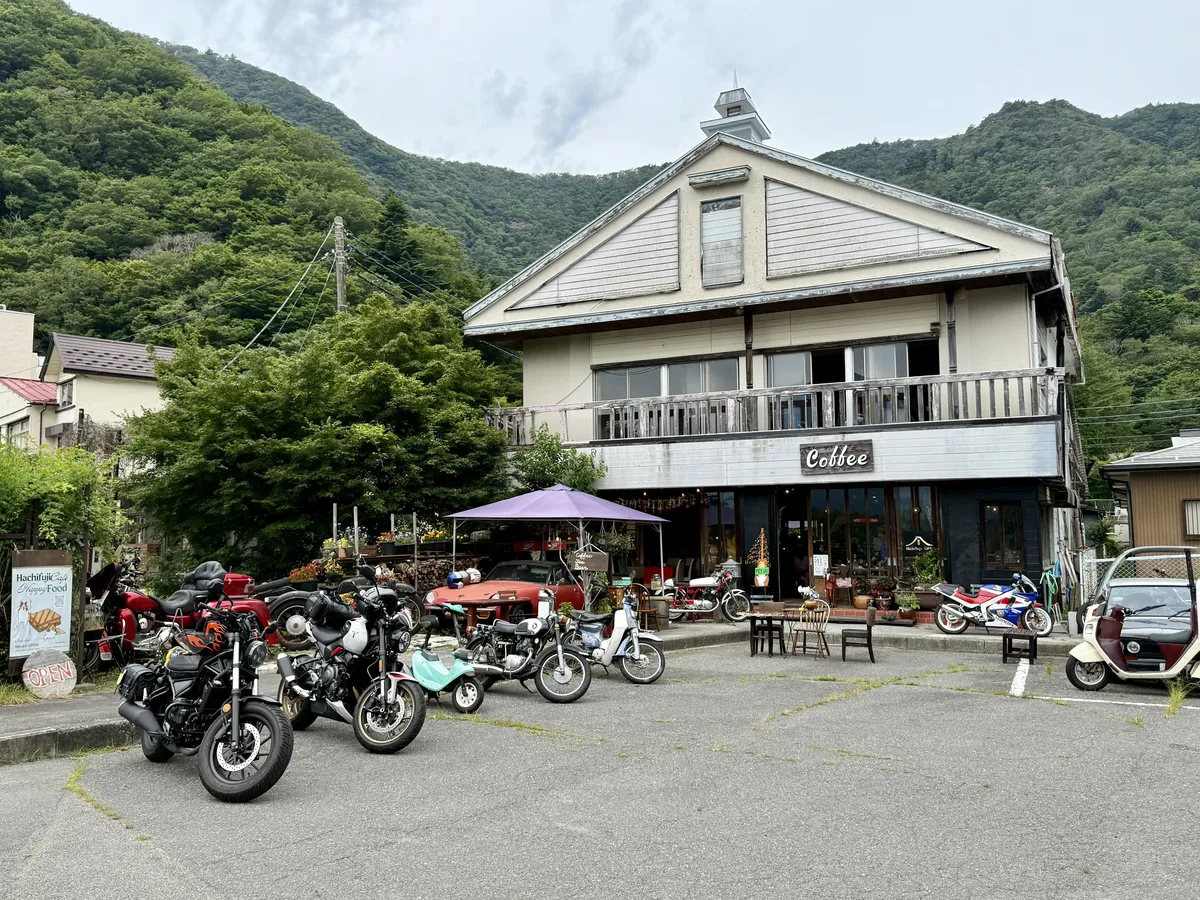
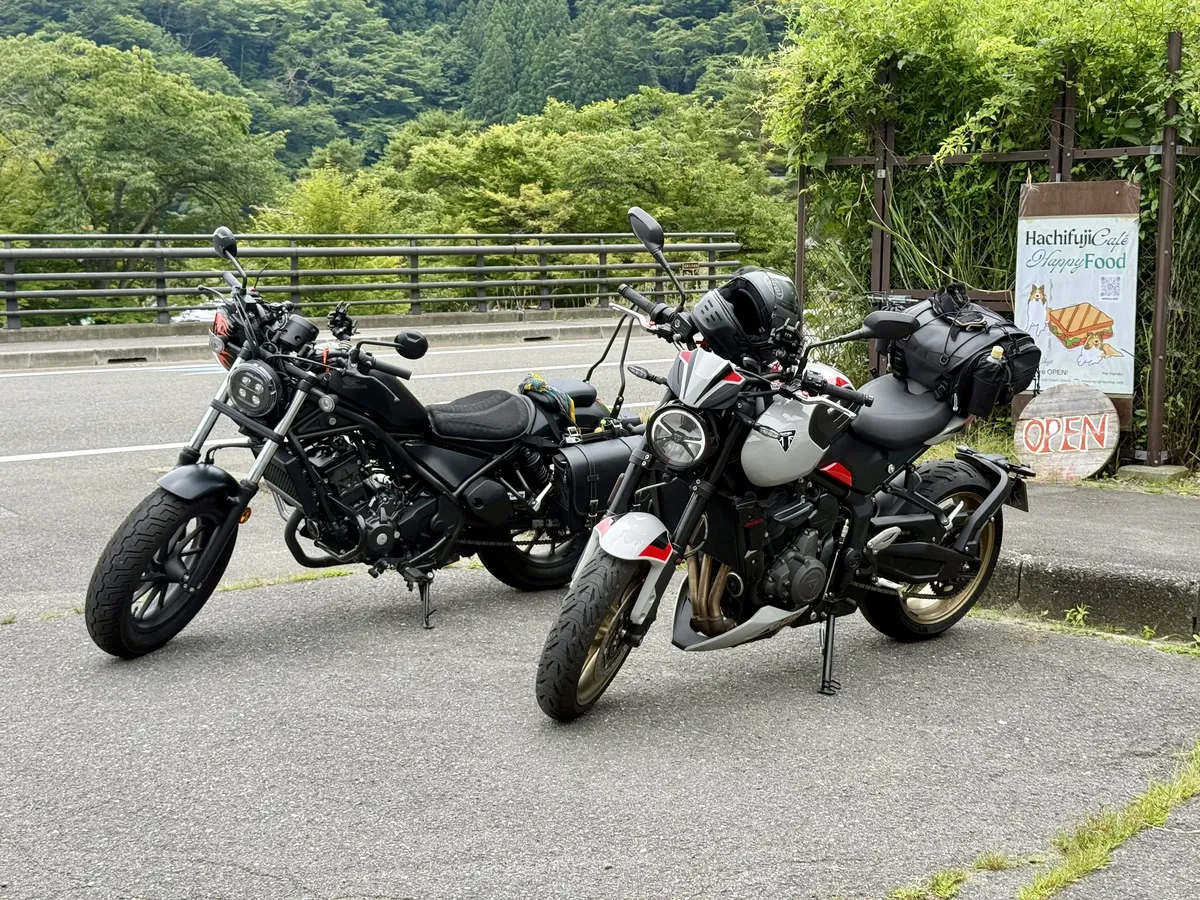
Last Sunday (July 12th, 2026) I went on a bike touring with my friend Marie. We met early in the morning at the Ishikawa Parking Area, and from there we headed for the Hachifuji Cafe, which overlooks Lake Shoji, one of the Fuji Five Lakes.
If you want to see just the photos, I put them all in this photo gallery, including many that aren't in this blog post.
Stop at Hachifuji Cafe
We had lunch there and ended up talking with the owners for a while. The whole place feels like it's stuck somewhere in the second half of the 20th century, in a good way. The owner is into cars and bikes, and you can tell from the decoration: motorsports signs and old parts on the walls, a few vintage bikes and cars parked around the place, and even some retro bikes for sale in one corner.
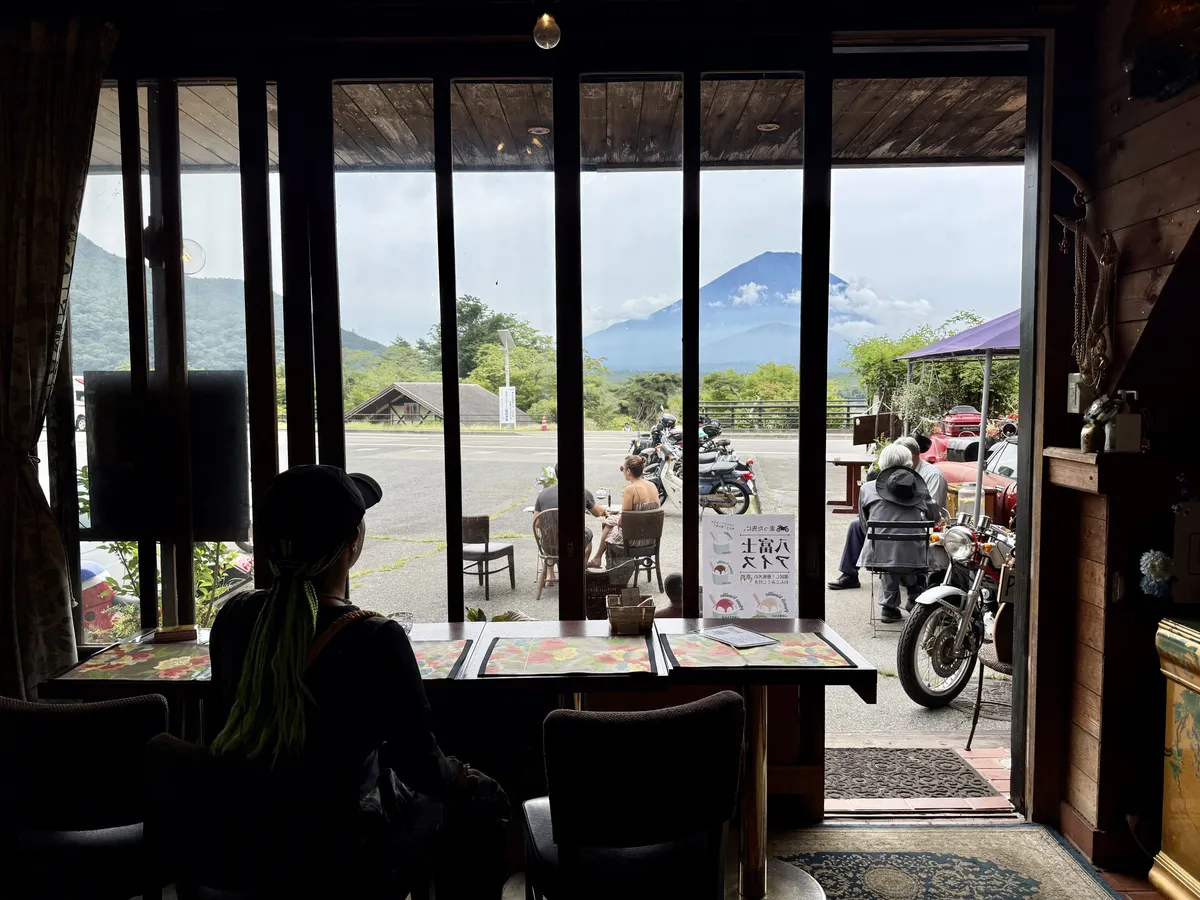
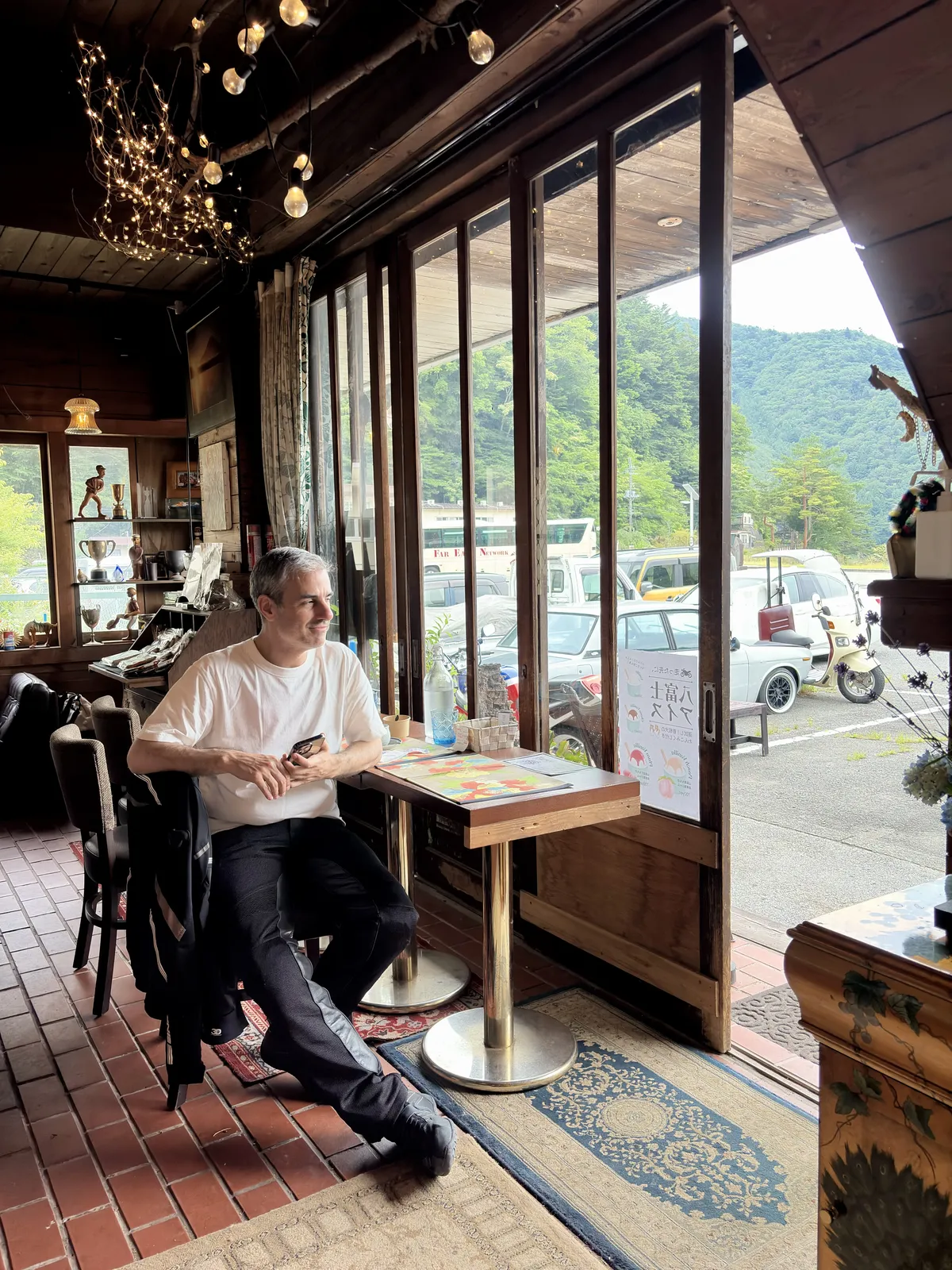
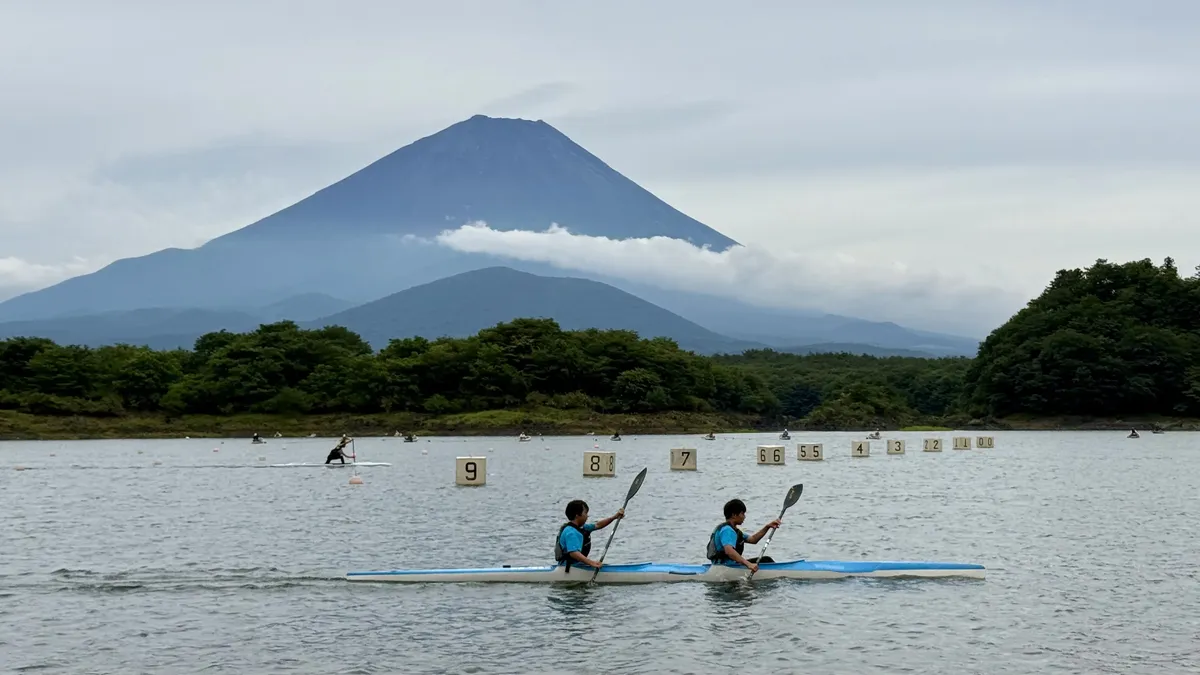
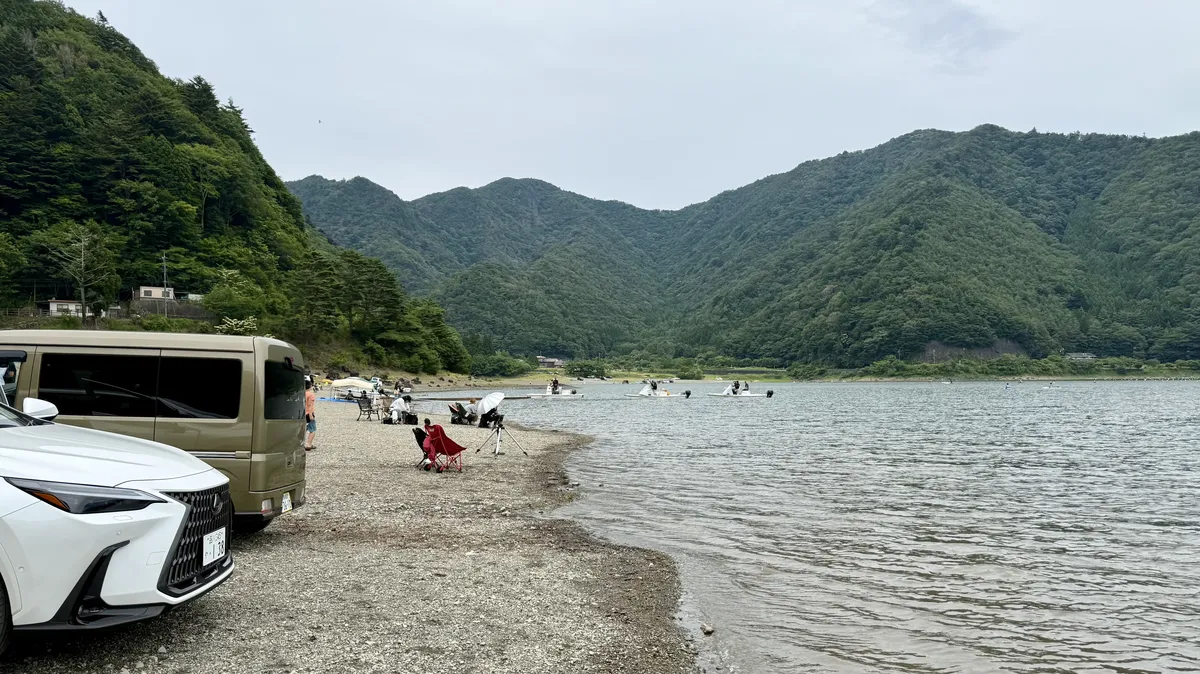
Canoe competition in Lake Shoji
That day there was a canoe competition going on in Lake Shoji, so we walked over to take a look. Lake Shoji is fairly small, which apparently makes it the perfect size to practice this sport, and the views from there, with Mount Fuji in the background, are fantastic.
The formation of the lakes
Lakes Shoji, Sai and Motosu weren't always separate lakes. Back in 864 AD (around 1,160 years ago) Mount Fuji had a major eruption, and the lava spread over the area in an enormous layer. Before that, all three were part of a single, larger lake called Se-no-umi. When the lava flowed in, it split that lake into the three smaller ones we see today, which is why they all still sit at almost exactly the same water level.
Aokigahara lava flow and the Aokigahara forest
That same eruption created the Aokigahara forest, which grew on top of the thick layer of hardened lava. It's a strange place. The lava here is rich in magnetic iron, so if you put a compass directly on the rock the needle can point somewhere other than north. On top of that, the porous rock absorbs sound, which gives the forest a very quiet, slightly eerie atmosphere.
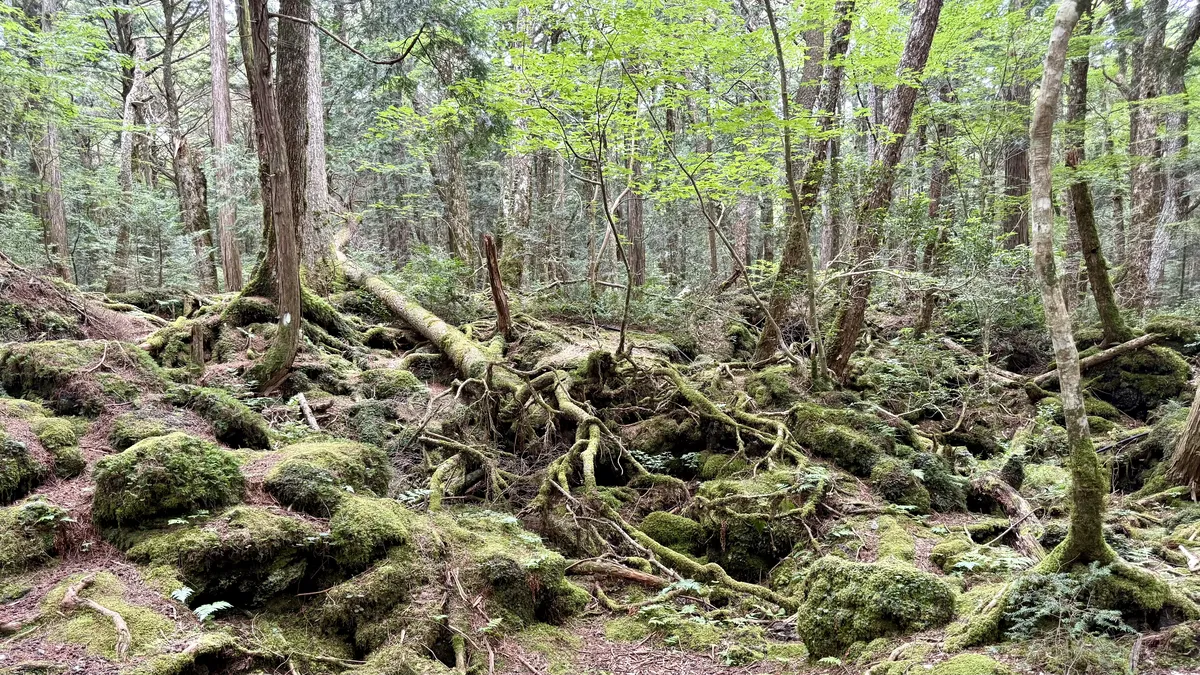
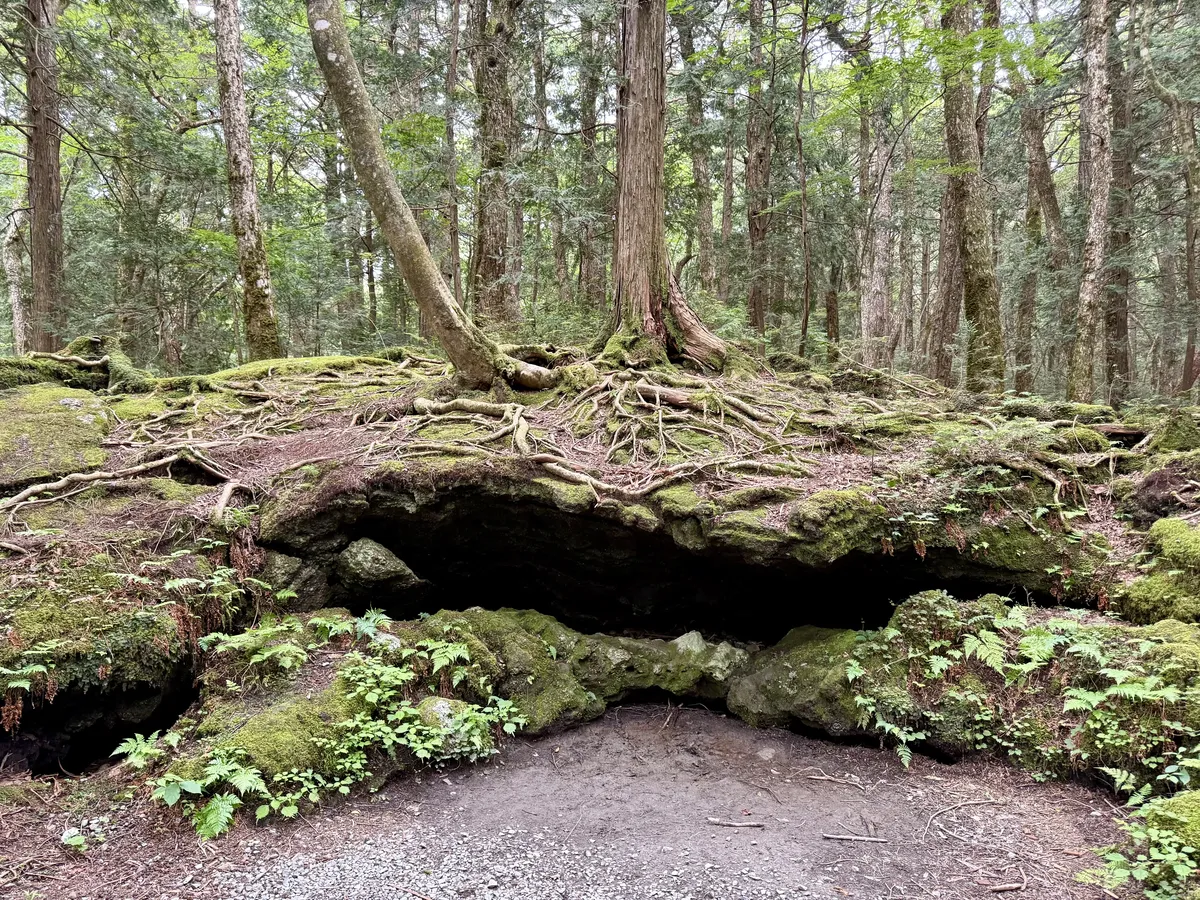
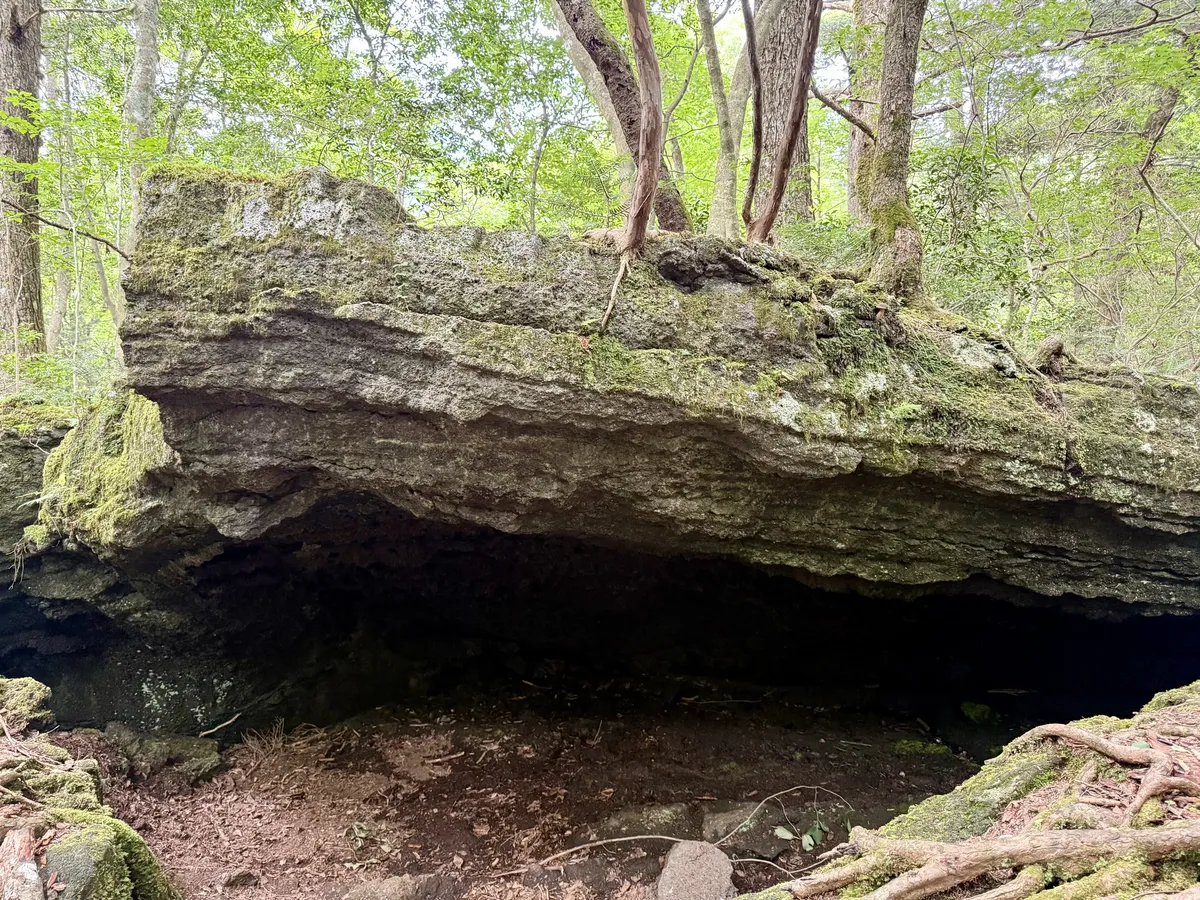
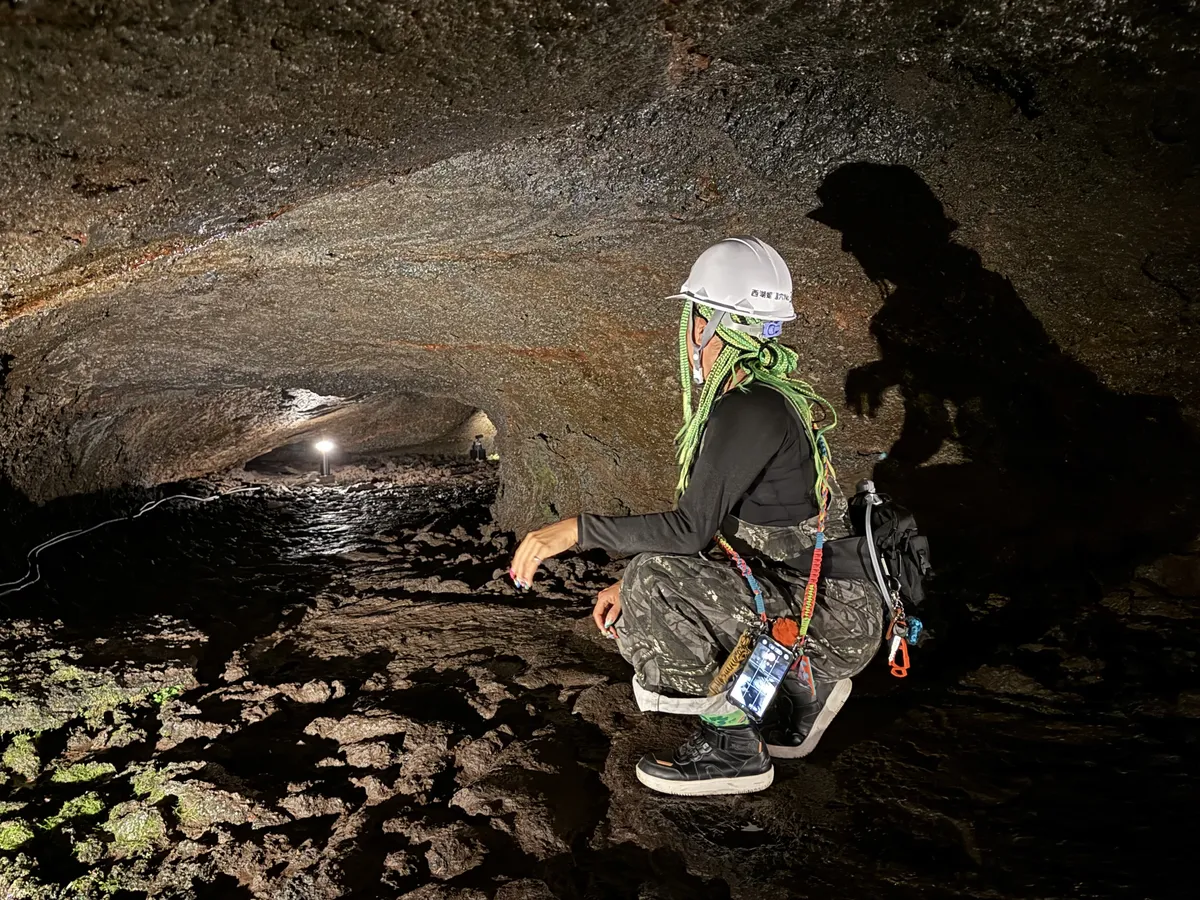
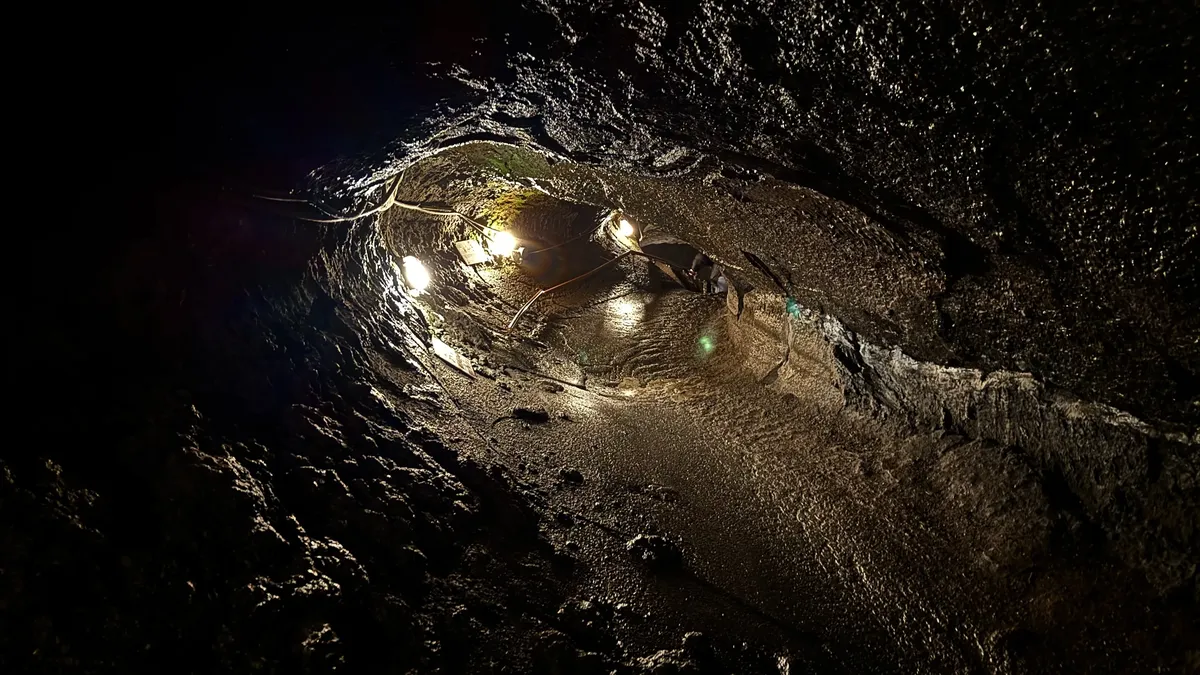
The lava layer is also full of natural caves, known as lava tubes. They formed while the lava was still flowing: the outside cooled down and hardened, while the inside stayed hot and kept moving, and once the last of the lava drained away it left these long hollow tubes behind.
After lunch we went to visit several of these caves around the area.
Fugaku Wind Cave
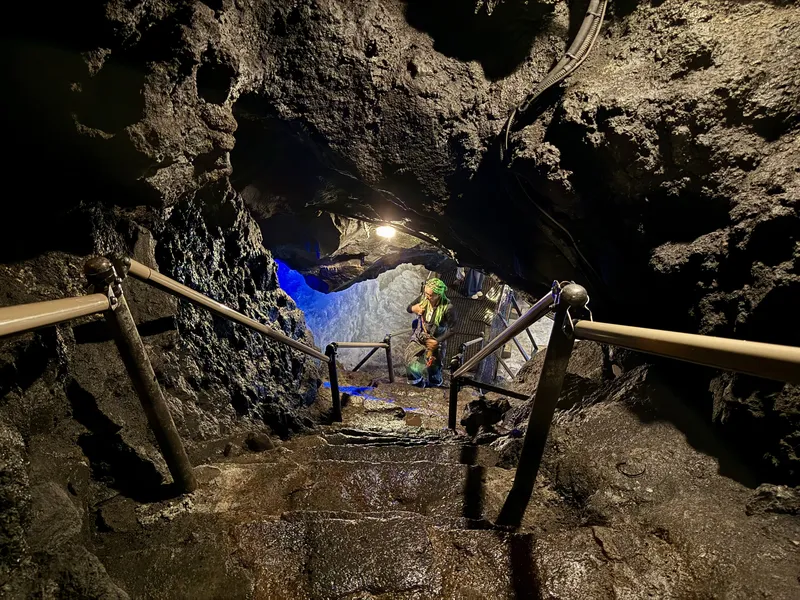
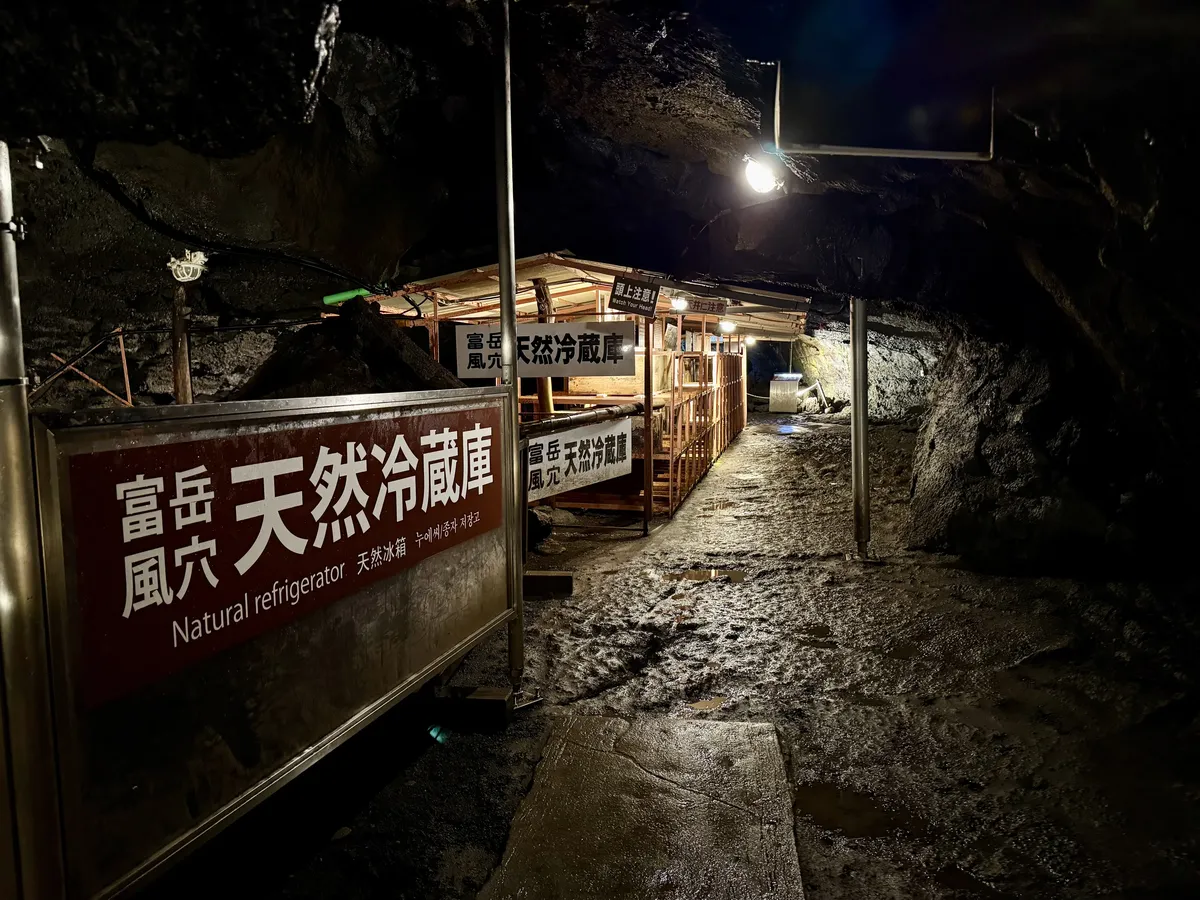
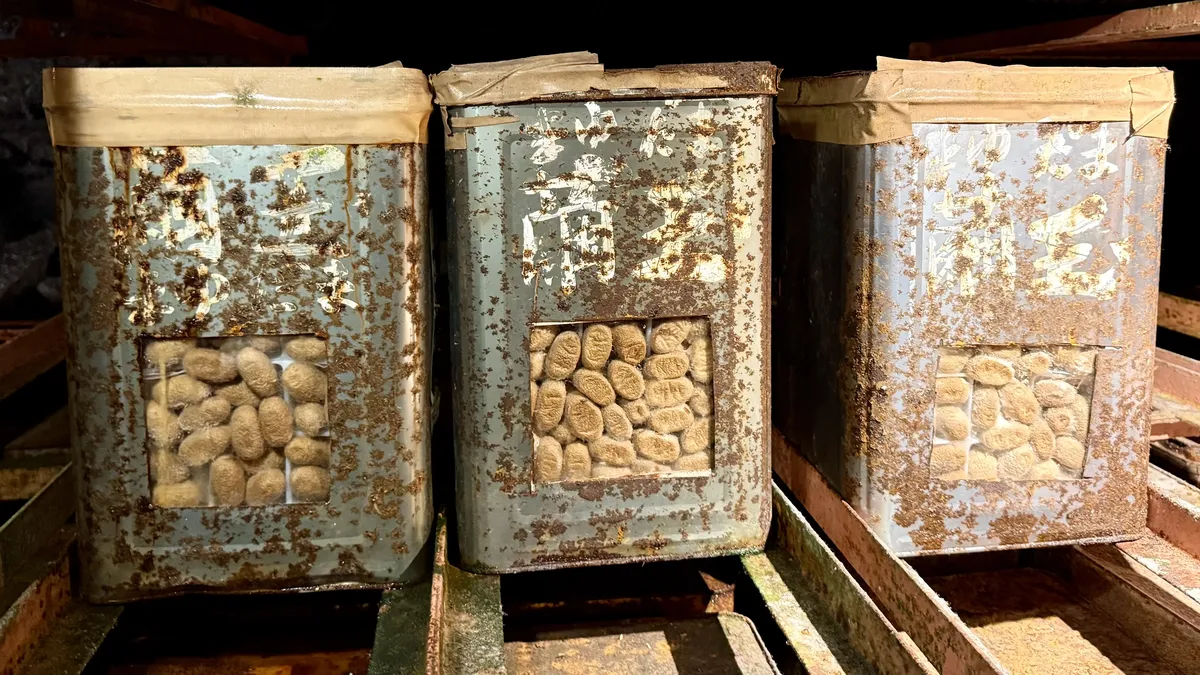
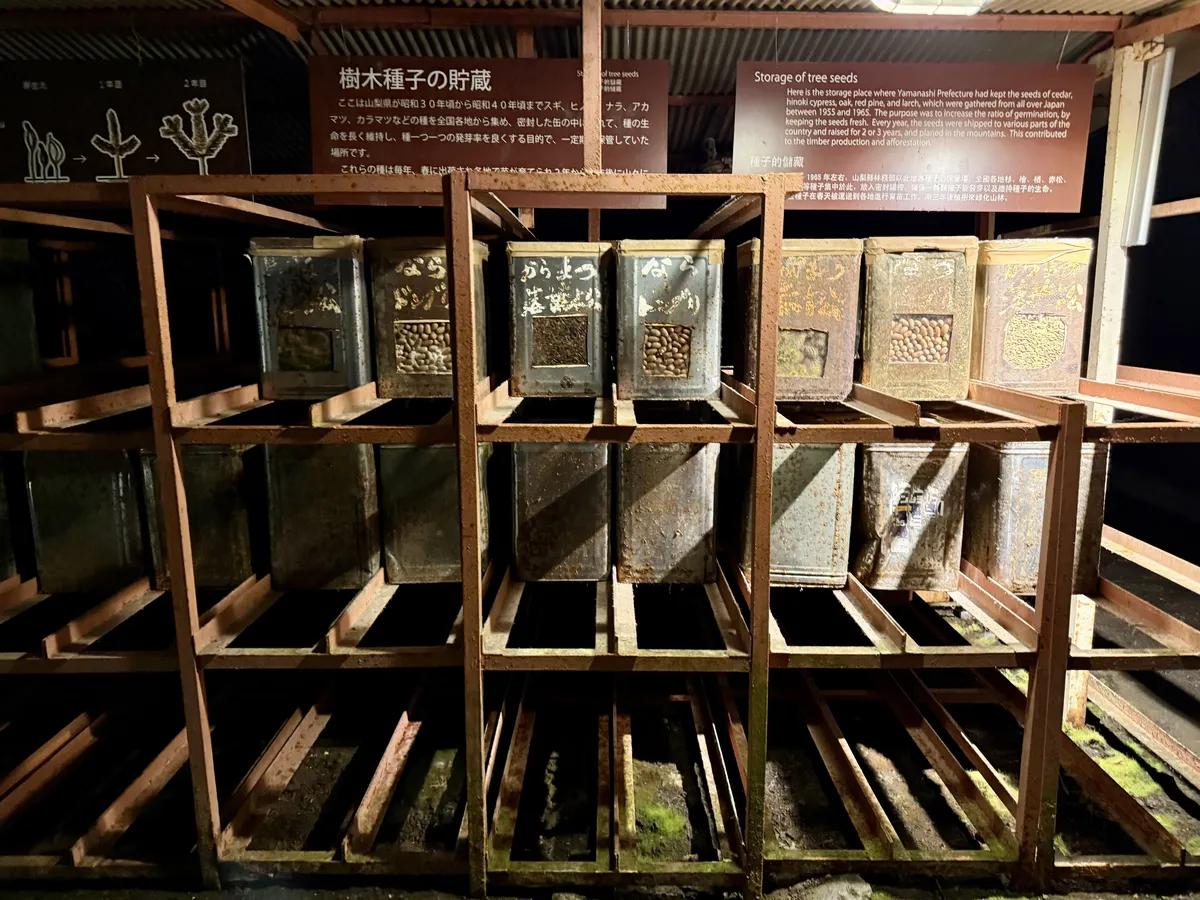
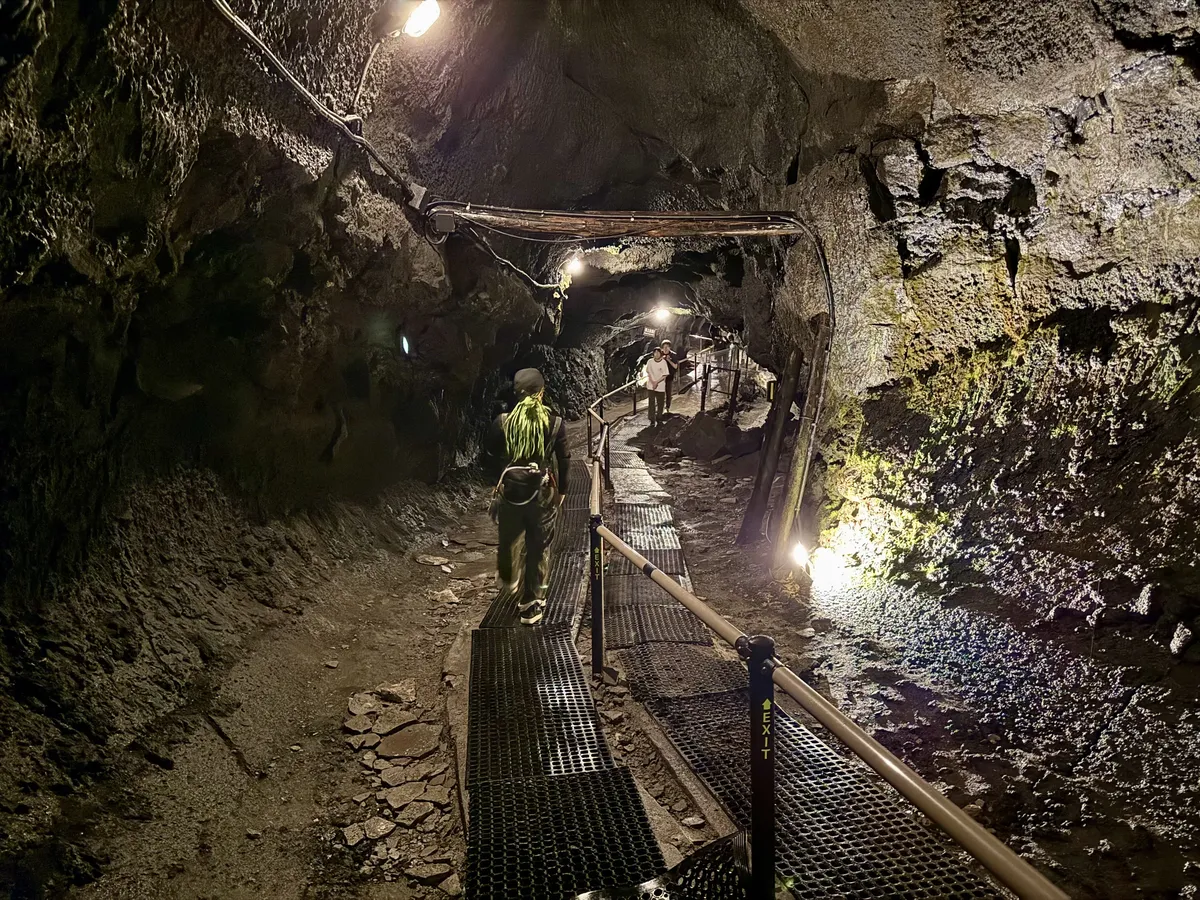
The first one was the Fugaku Wind Cave. It's cold in there, around 3°C, and the funny thing is how sudden it is: the moment you start going down the stairs below ground level you feel the temperature drop instantly, like walking into a fridge. That's basically what it was used for. Back in the day, when there were no electric refrigerators, this cave worked as natural cold storage to keep silkworm eggs and seeds. There's a display at the deepest point of the cave consisting on metal shelves and cut-out storage cans, showing how the silkworm eggs and seeds were stored up to 1955.
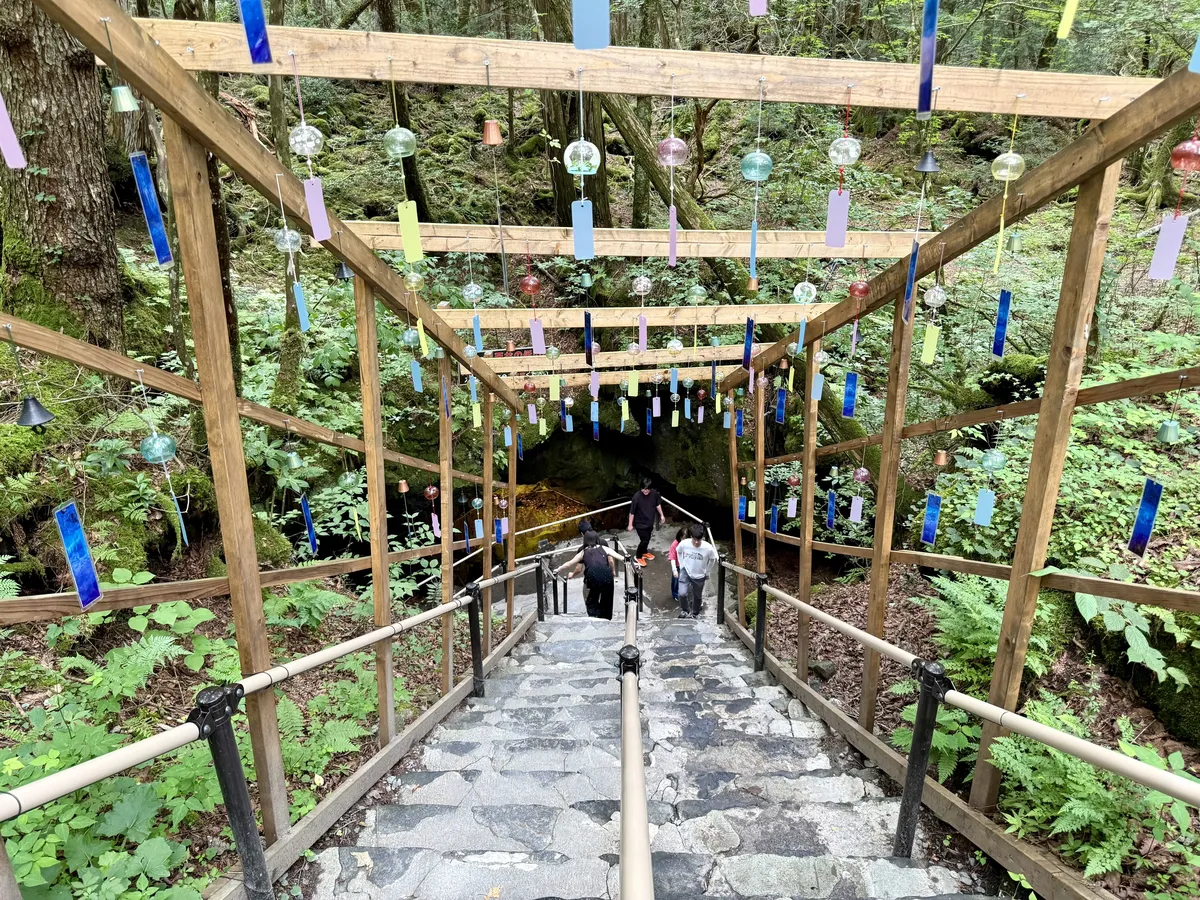
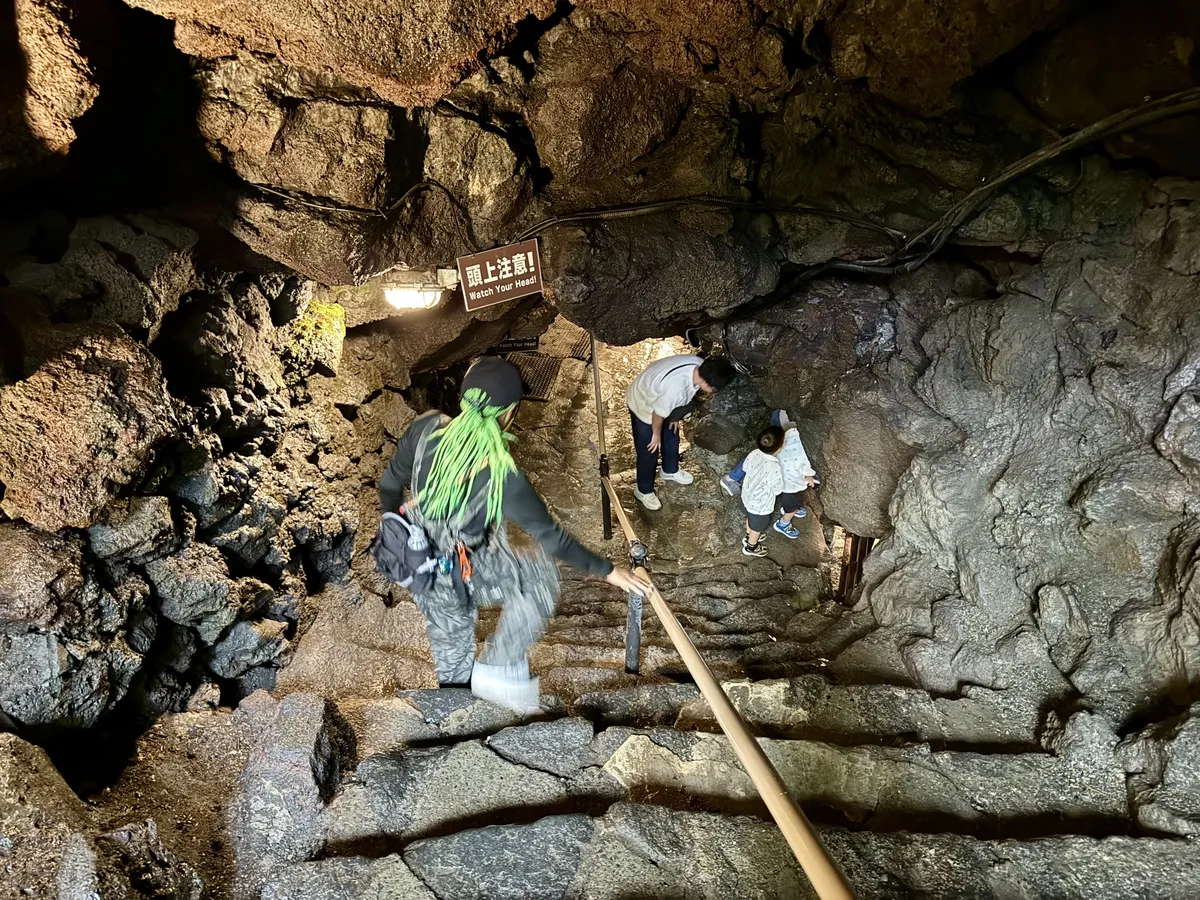
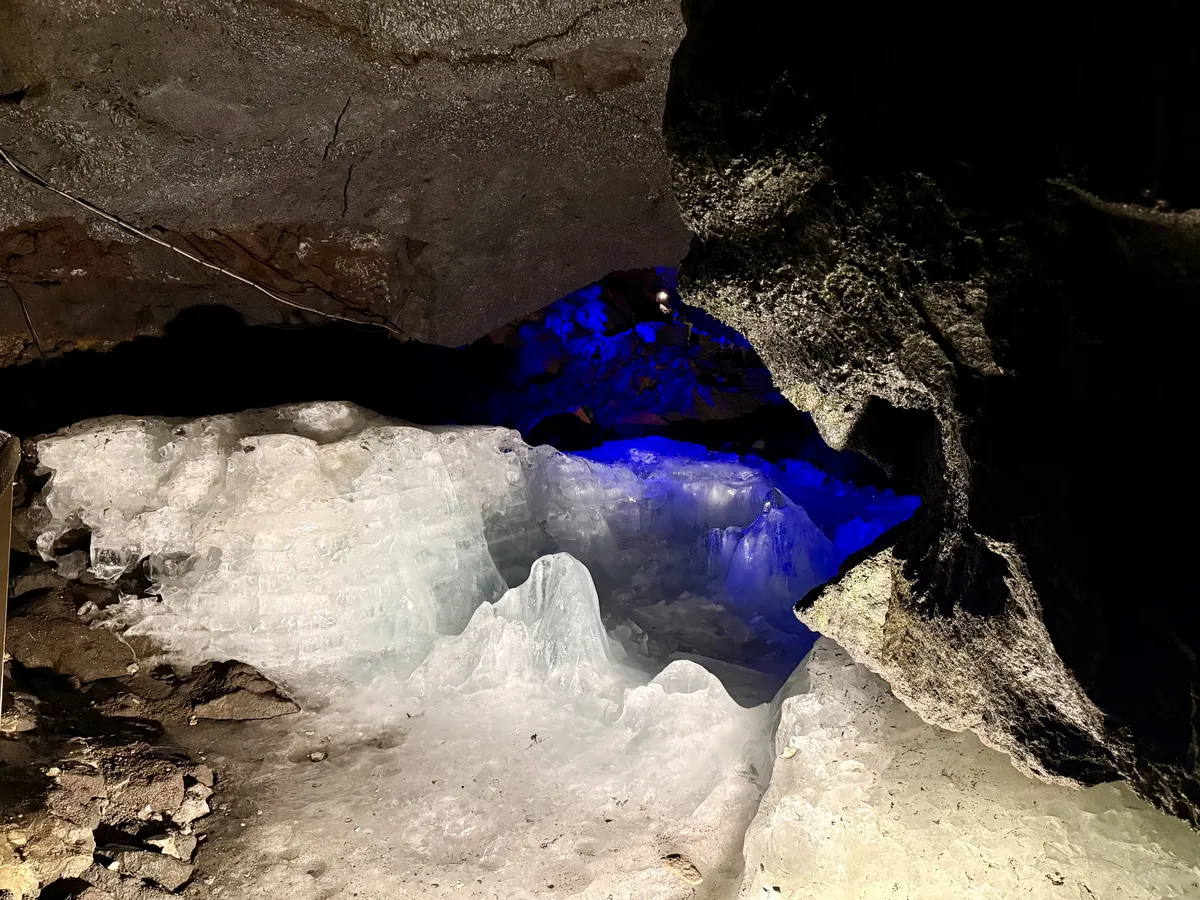
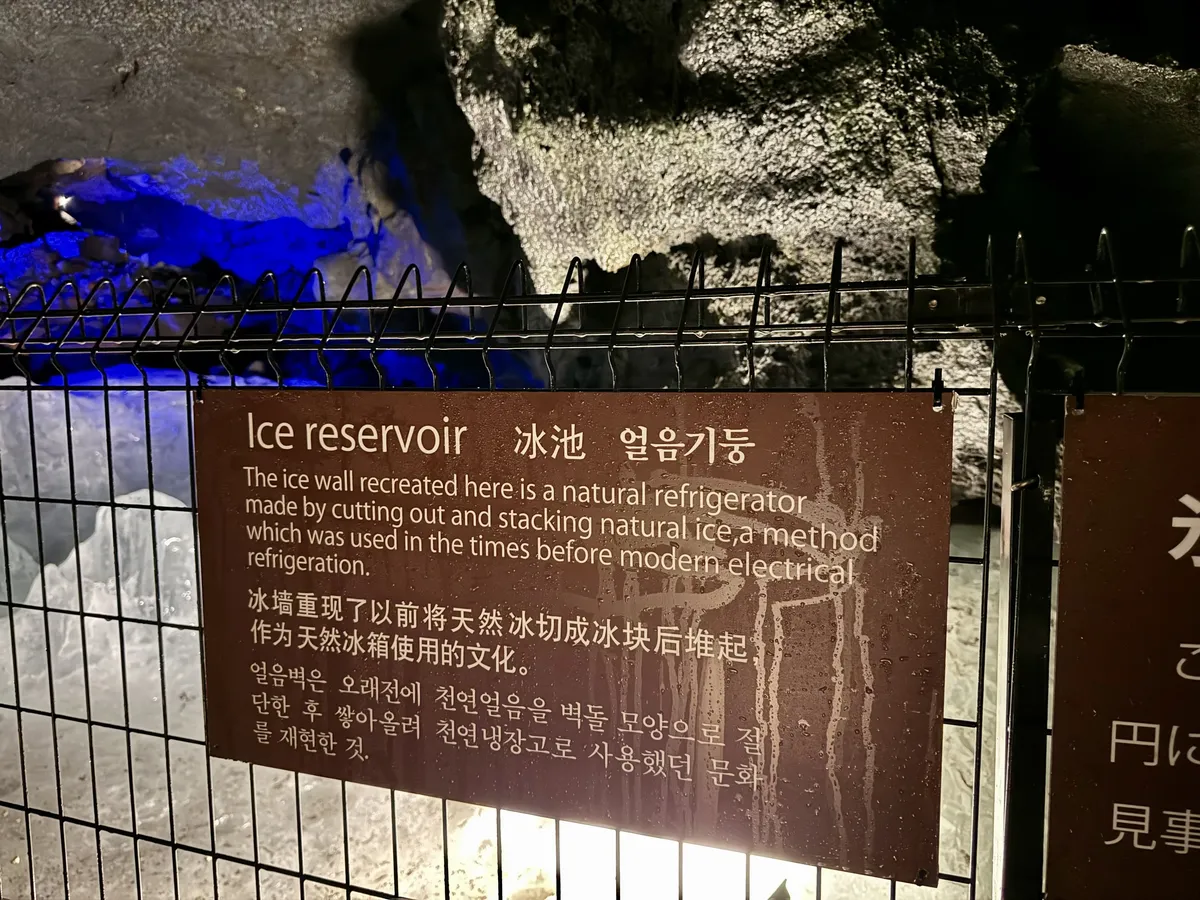
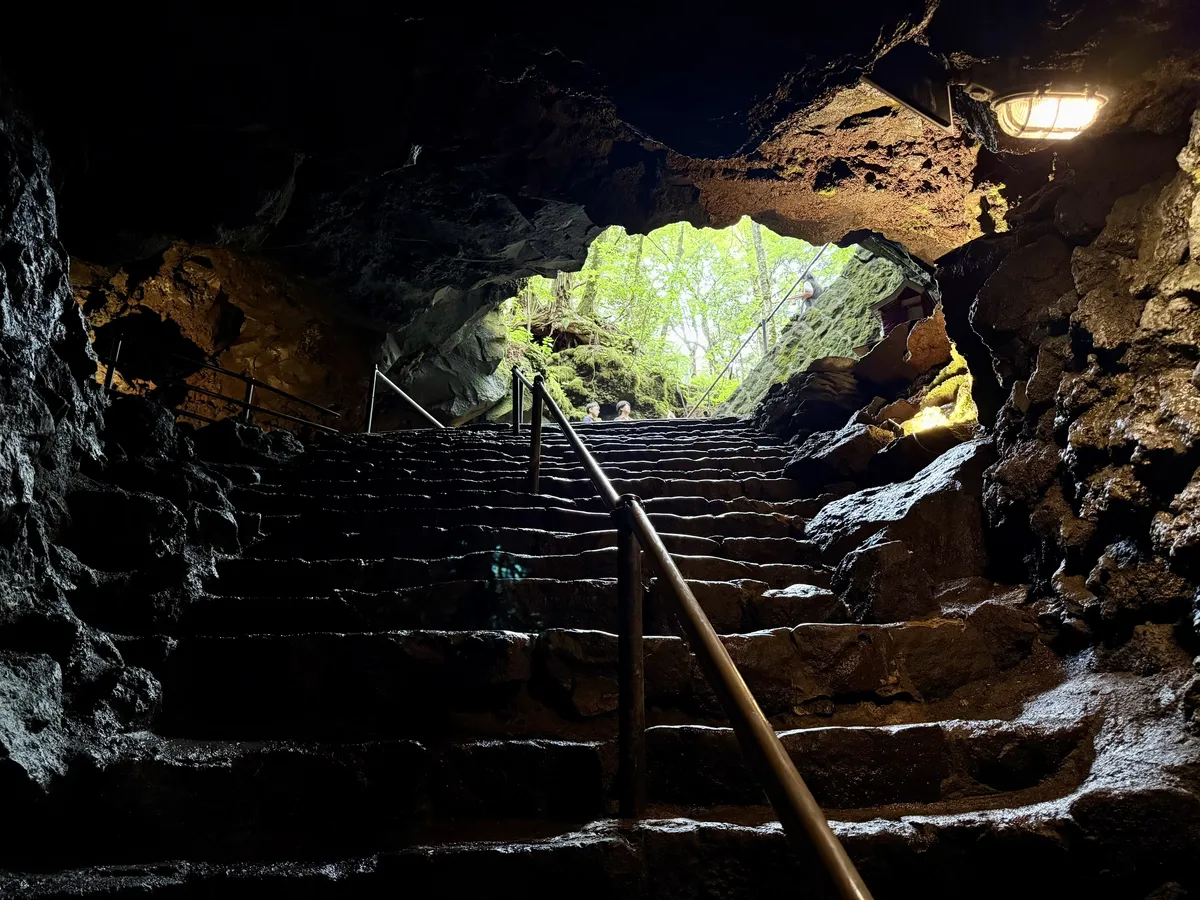
Narusawa Ice Cave
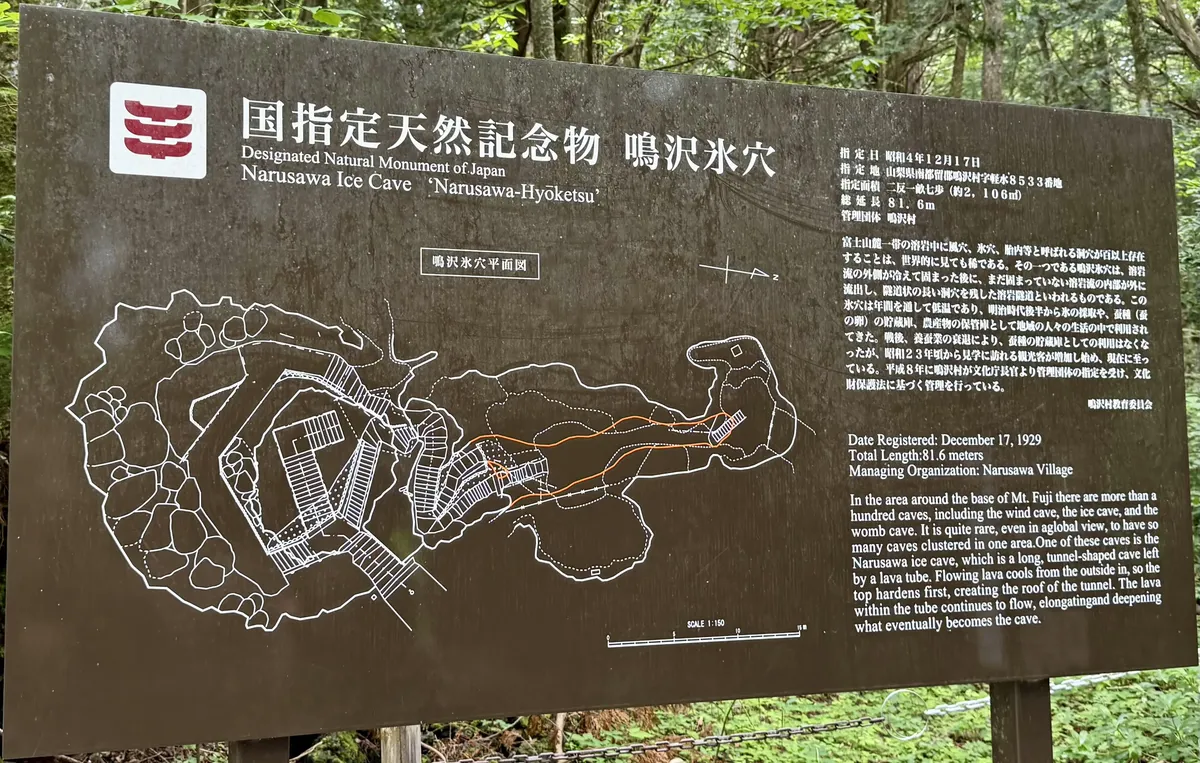
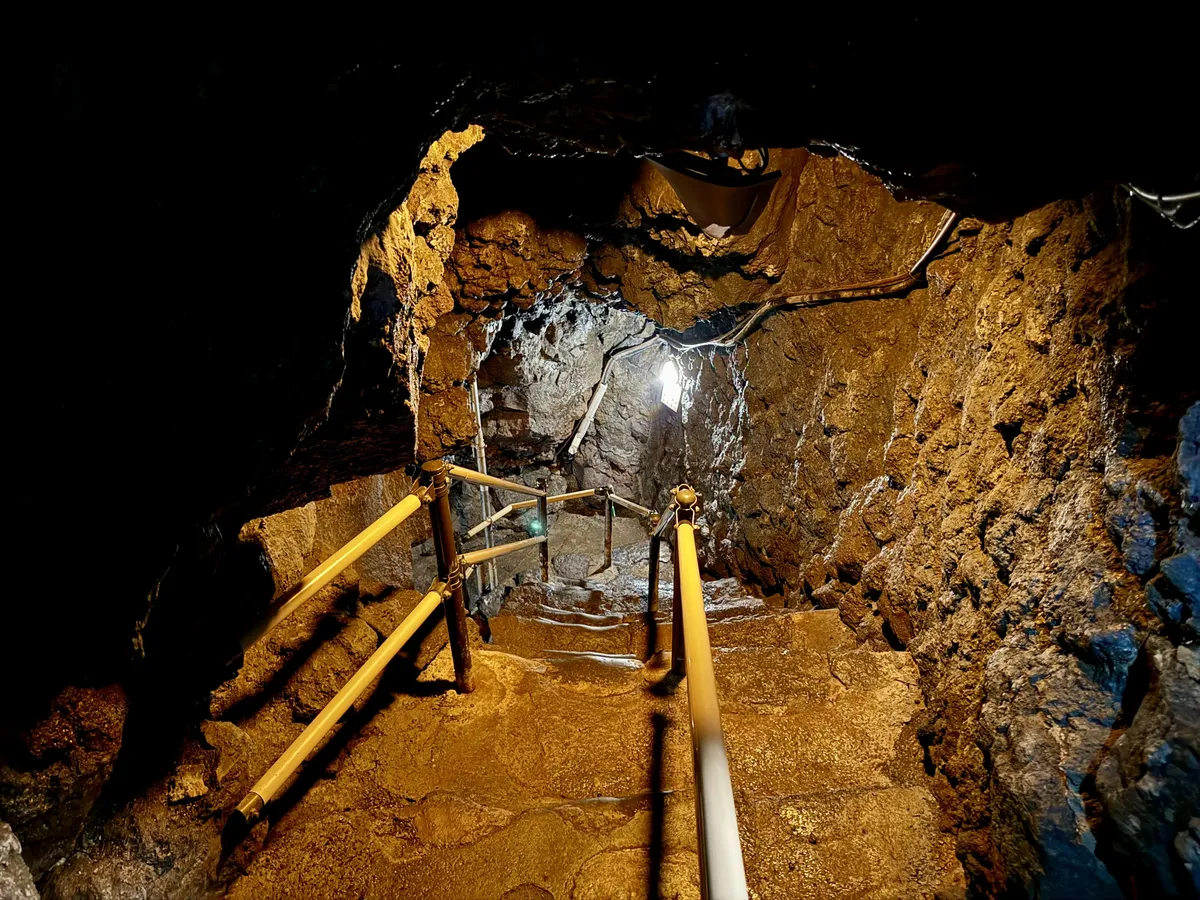
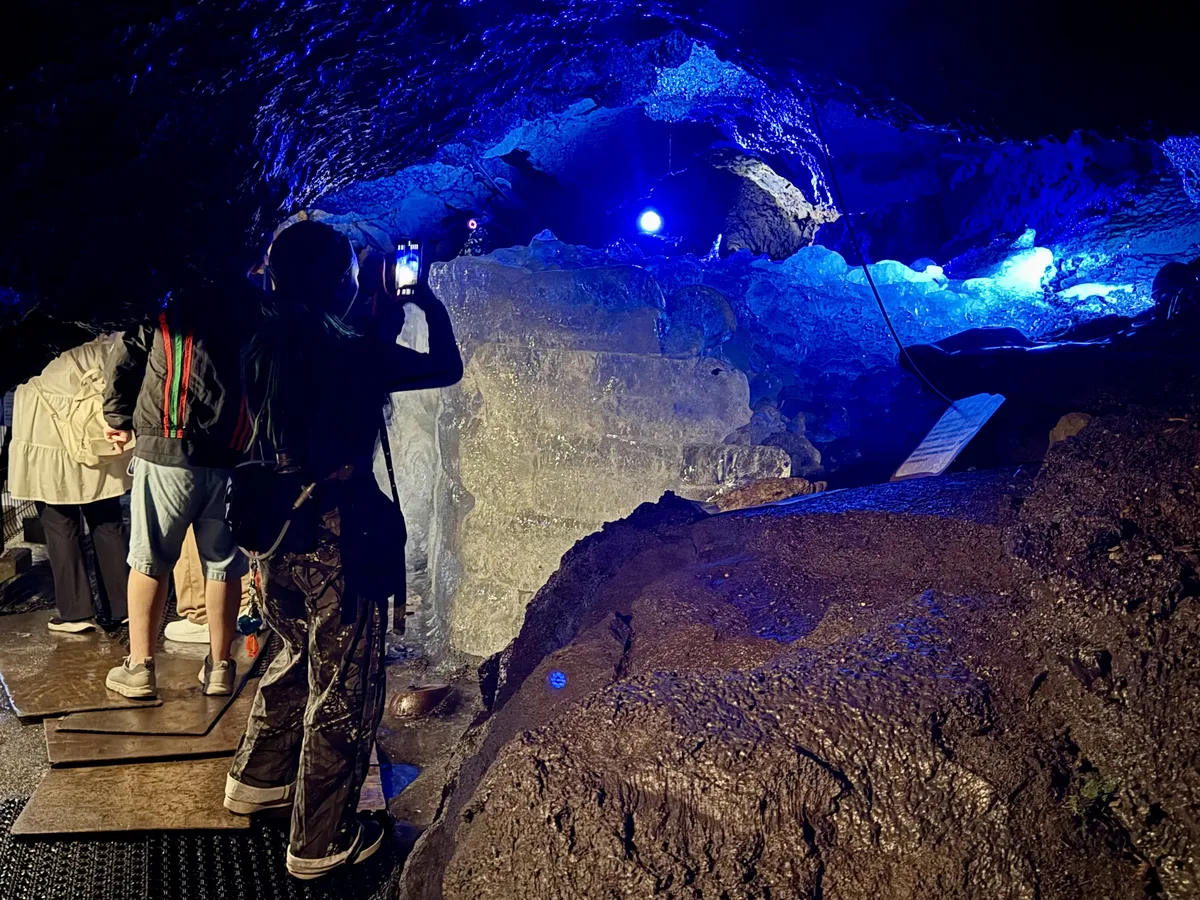
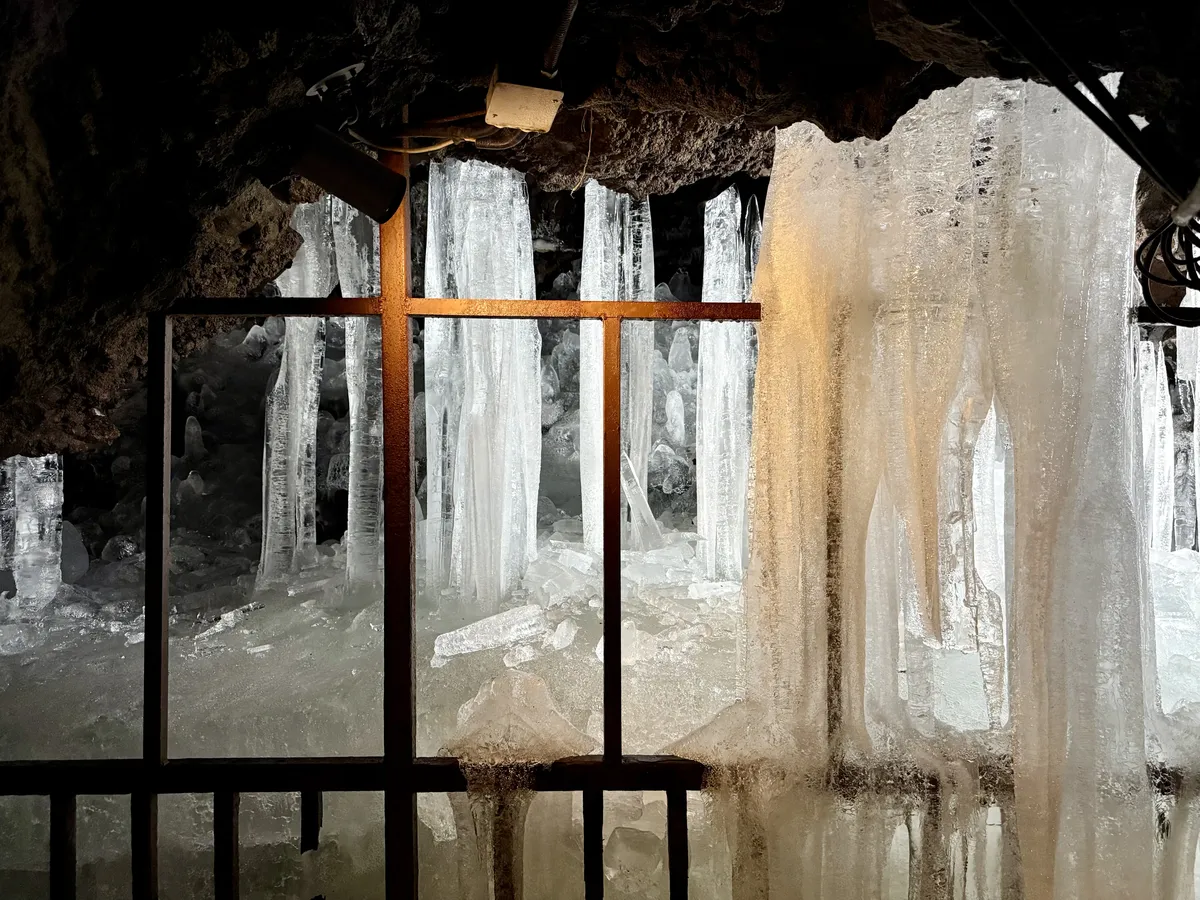
Next was the Narusawa Ice Cave. Here it's cold enough that ice forms inside all year round, even in the middle of summer. Before the electric refrigerator arrived, people used this cave as a source of ice.
This one was used to store silkworm eggs and seeds too, but in this case the storage was near the entrance, in a large opening just below ground level. The air temperature there is still almost freezing, even though it's exposed to the outside air.
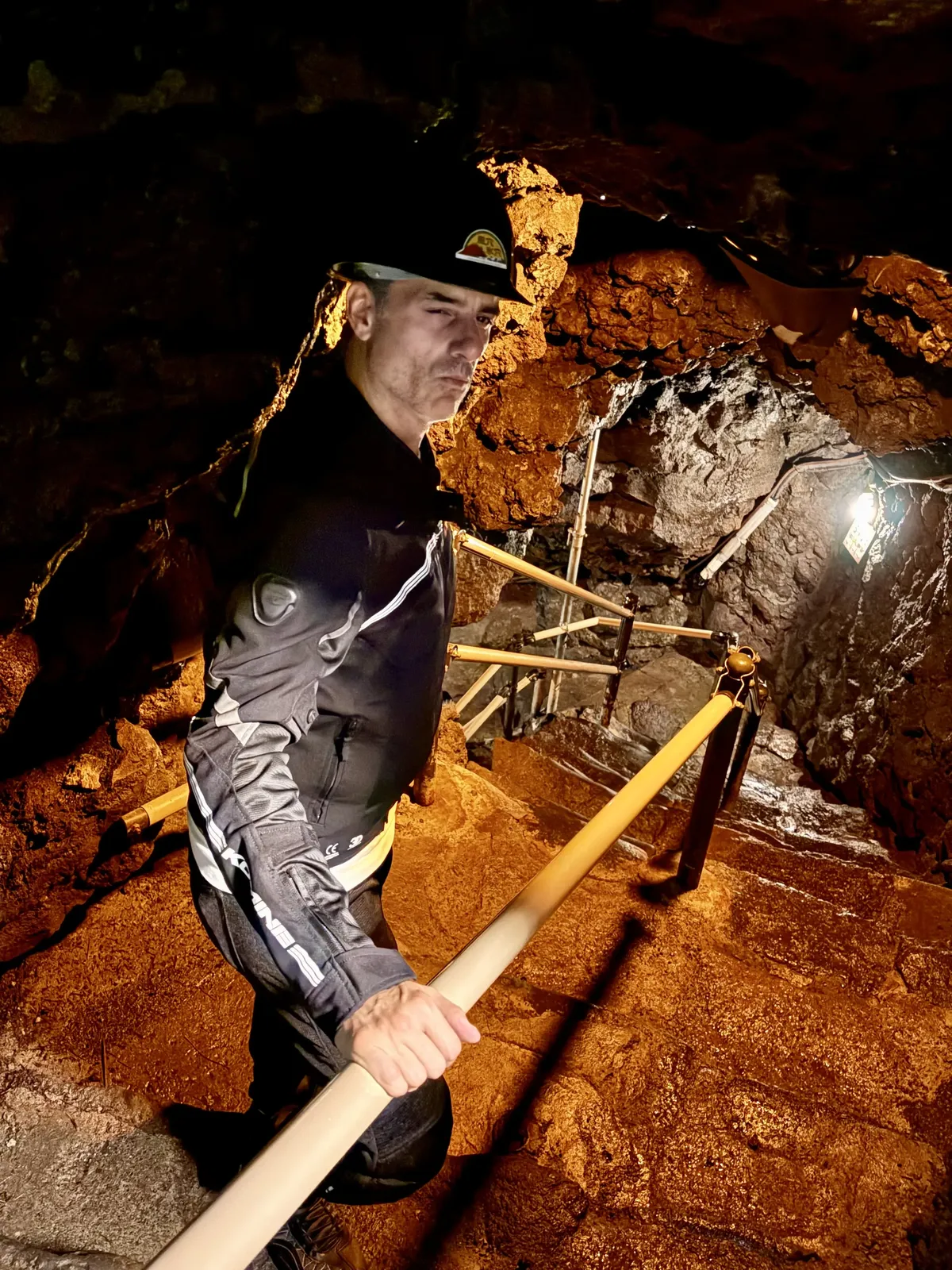
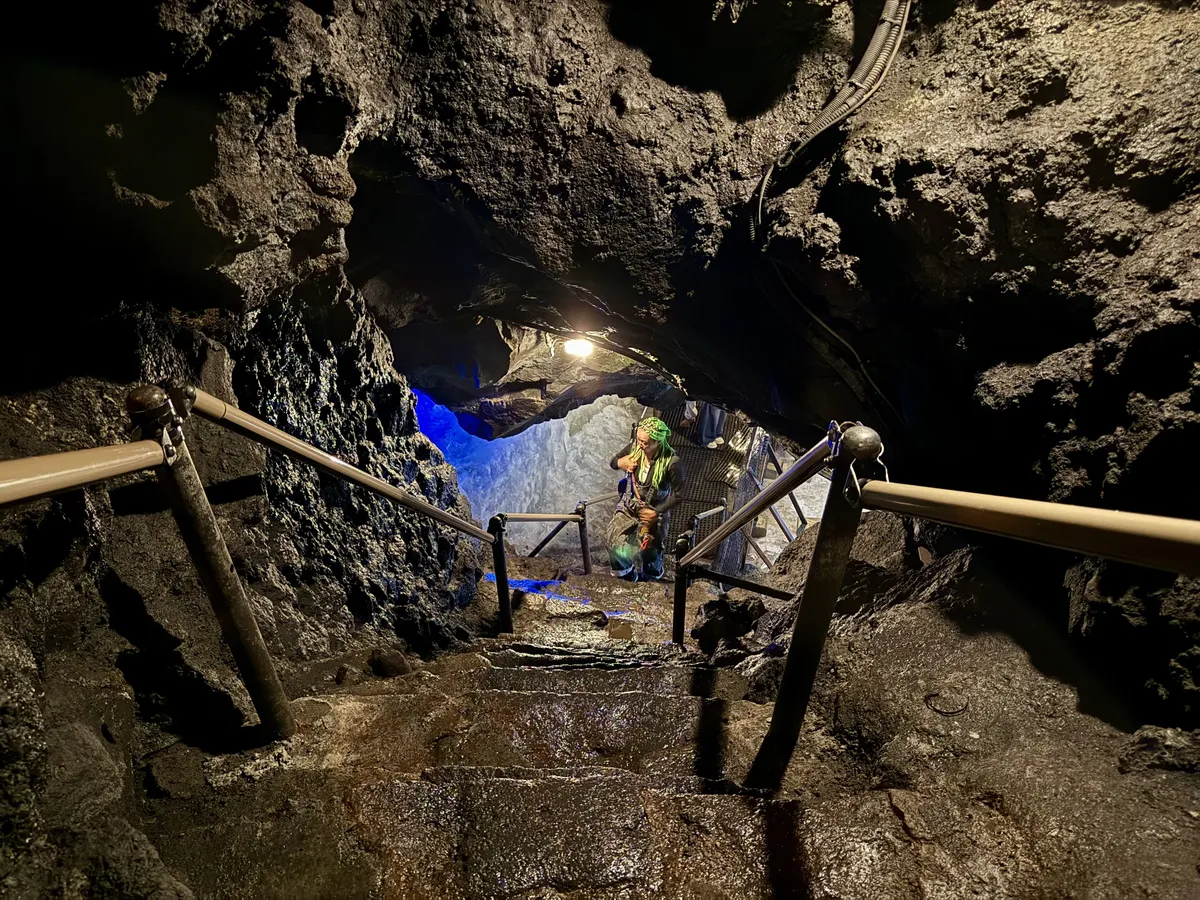
The Ice Cave is tighter than the Wind Cave, and it's steeper inside. This one does generate its own ice.
Lake Sai Bat Cave
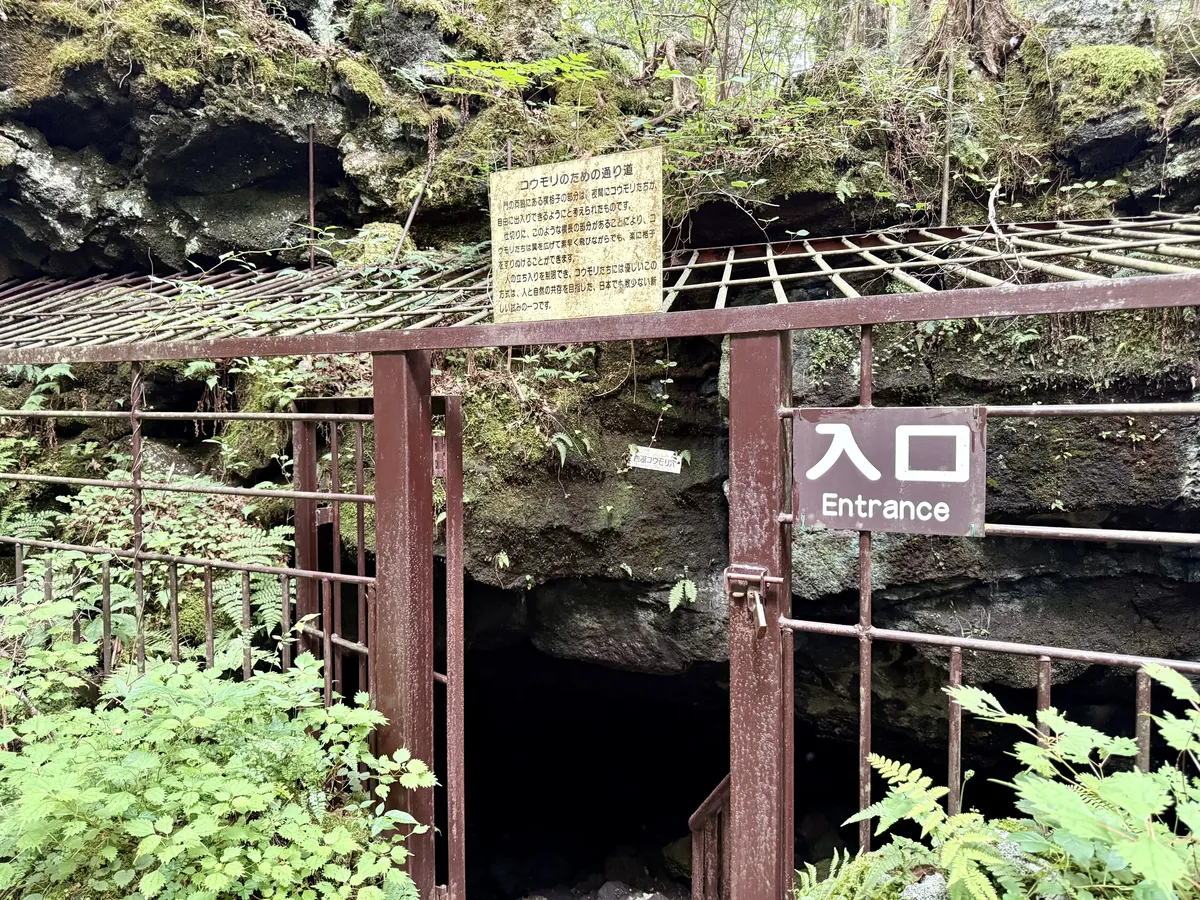
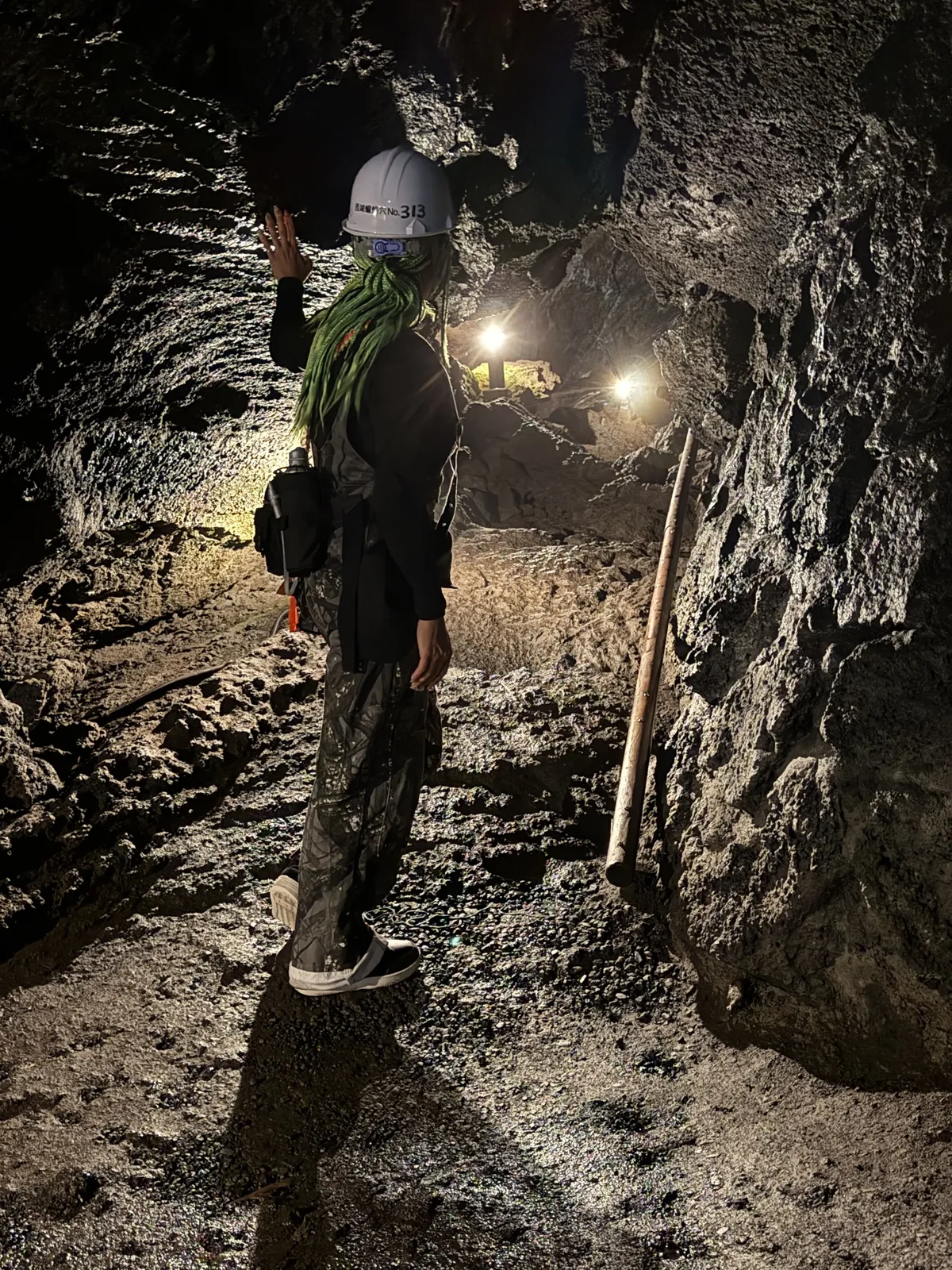
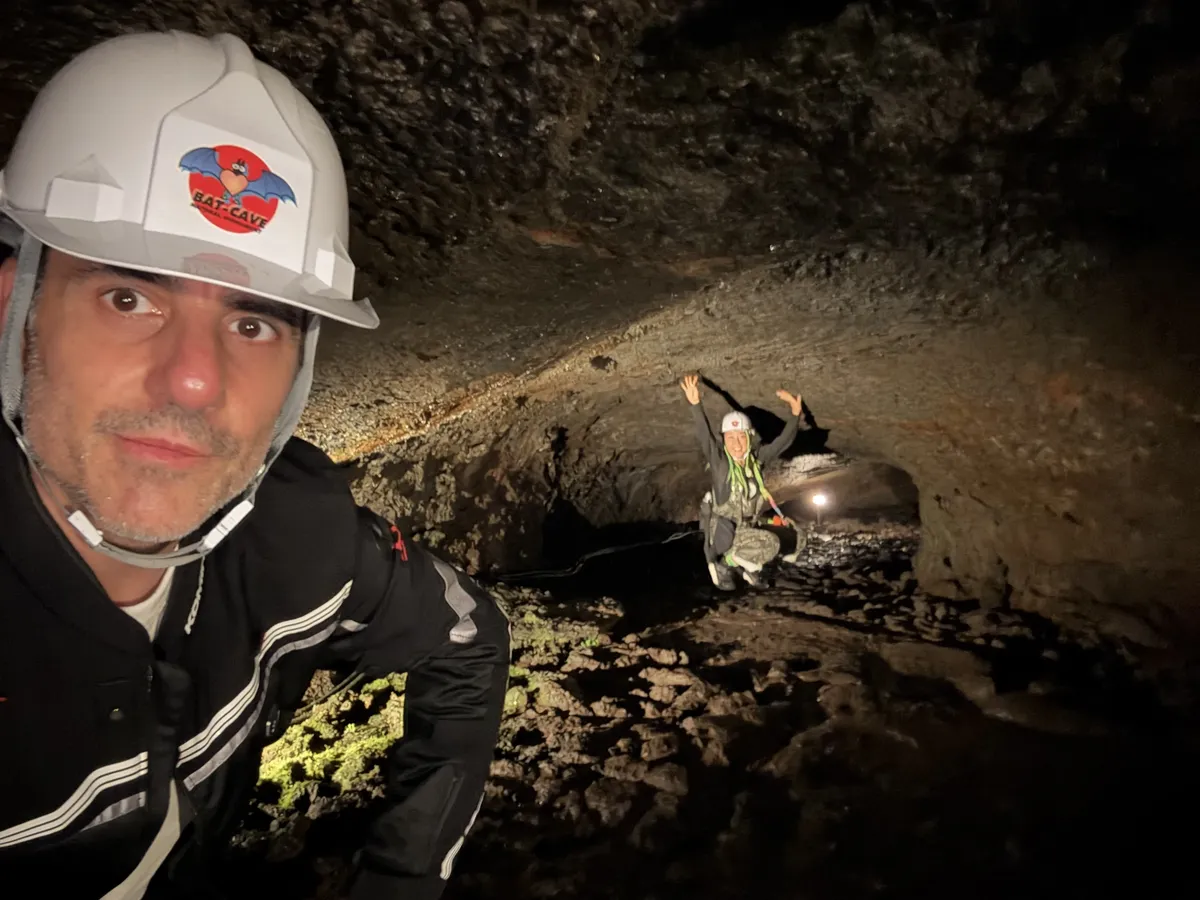
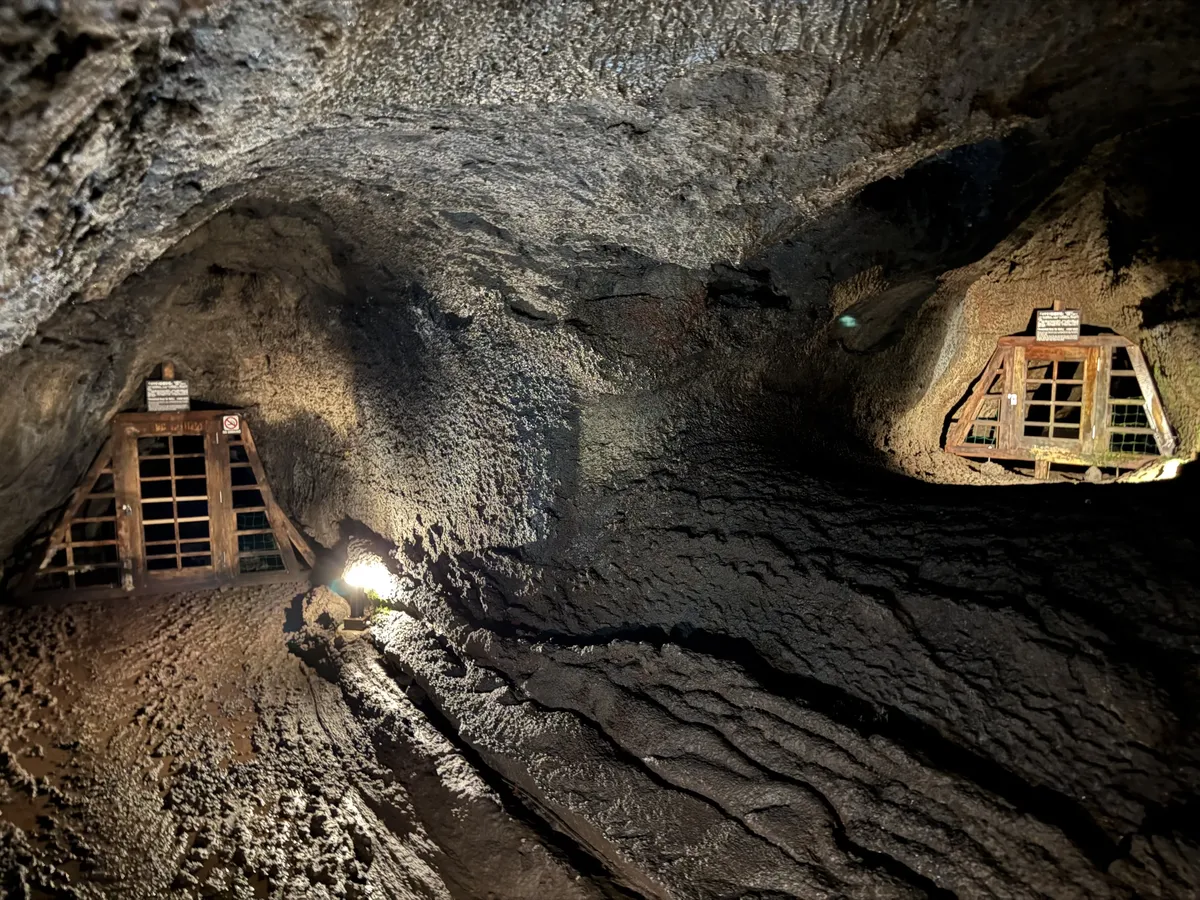
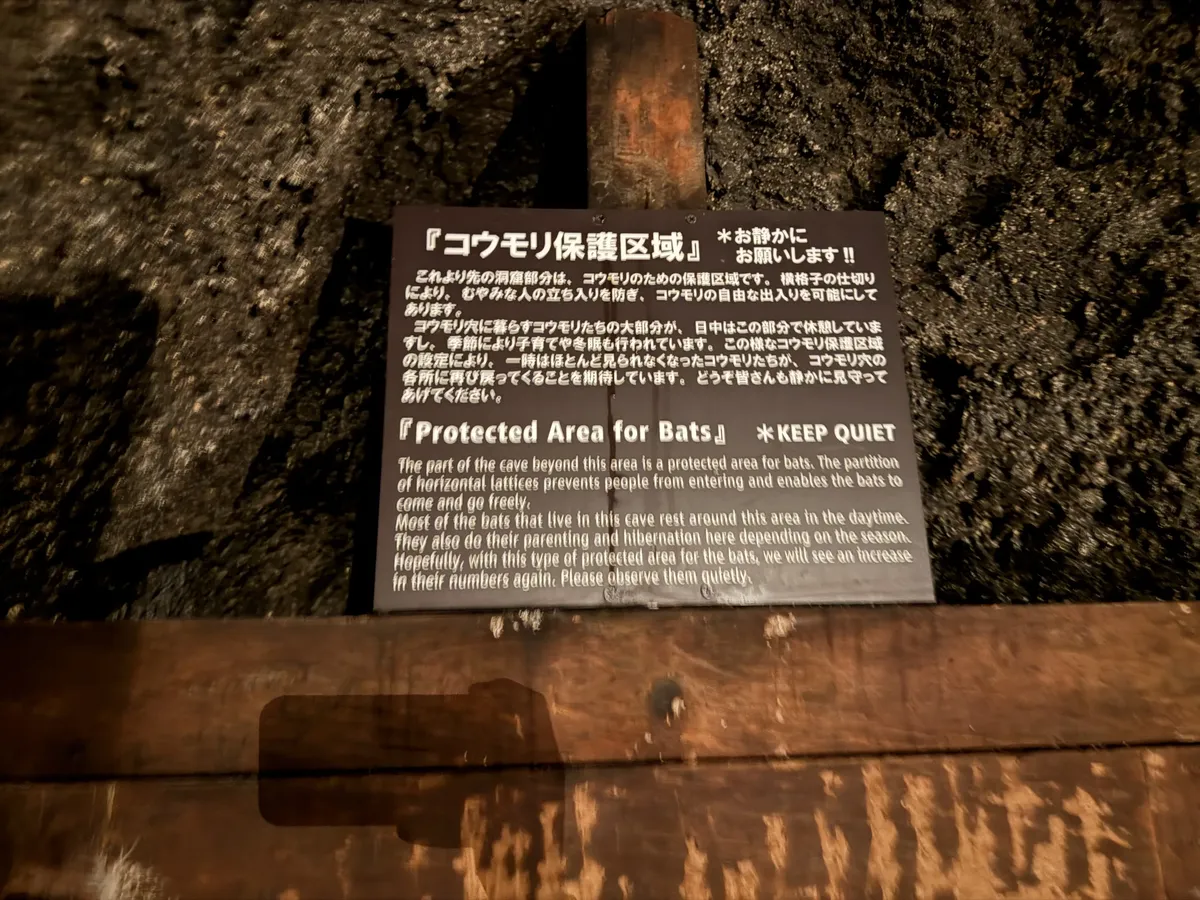
The last one was the Lake Sai Bat Cave. This one is a bit warmer than the other two, and also longer and deeper. As the name suggests, there are colonies of bats living inside: they sleep here during the day and hibernate through the winter, and for that reason the cave is closed to the public during the colder months so they aren't disturbed. In some parts the roof gets very low, so you're required to wear a hat to avoid hitting your head.
The deepest parts of the cave are closed to visitors, and protected with wooden gates so people can't pass, but bats can come and go freely.